The Premium Category offers an exclusive experience, including:
The best available seats within the Optima Category
A contribution in support of the Opera
A program of the event
A glass of champagne
First part
Act 1 - The duel
Ferrando tells his soldiers the story of a gypsy who was burned at the stake for having bewitched the younger of the two sons of the old Count di Luna. Soon thereafter, the gypsy’s daughter abducted the child out of vengeance and its charred remains were discovered on the very spot where her mother had been tortured to death. Ferrando has not yet found the gypsy’s daughter but he is certain that he will be able to recognise her in spite of all the years that have passed.
It is evening and Leonora awaits her lover, the troubadour Manrico. She tells Ines, her confidante, how she met him. Ines advises Leonora to forget Manrico. The present Count di Luna, who is also enamoured of Leonora, approaches, having finally decided to declare his love for her. Just then, the melodious voice of Manrico is heard. Fooled by the darkness, Leonora rushes towards the Count, but she soon realises her mistake when Manrico appears. Furious, the Count regards the singer not just as a rival, but also as a political adversary. Their dispute will be settled by a duel.
Act 2 - The gypsy woman
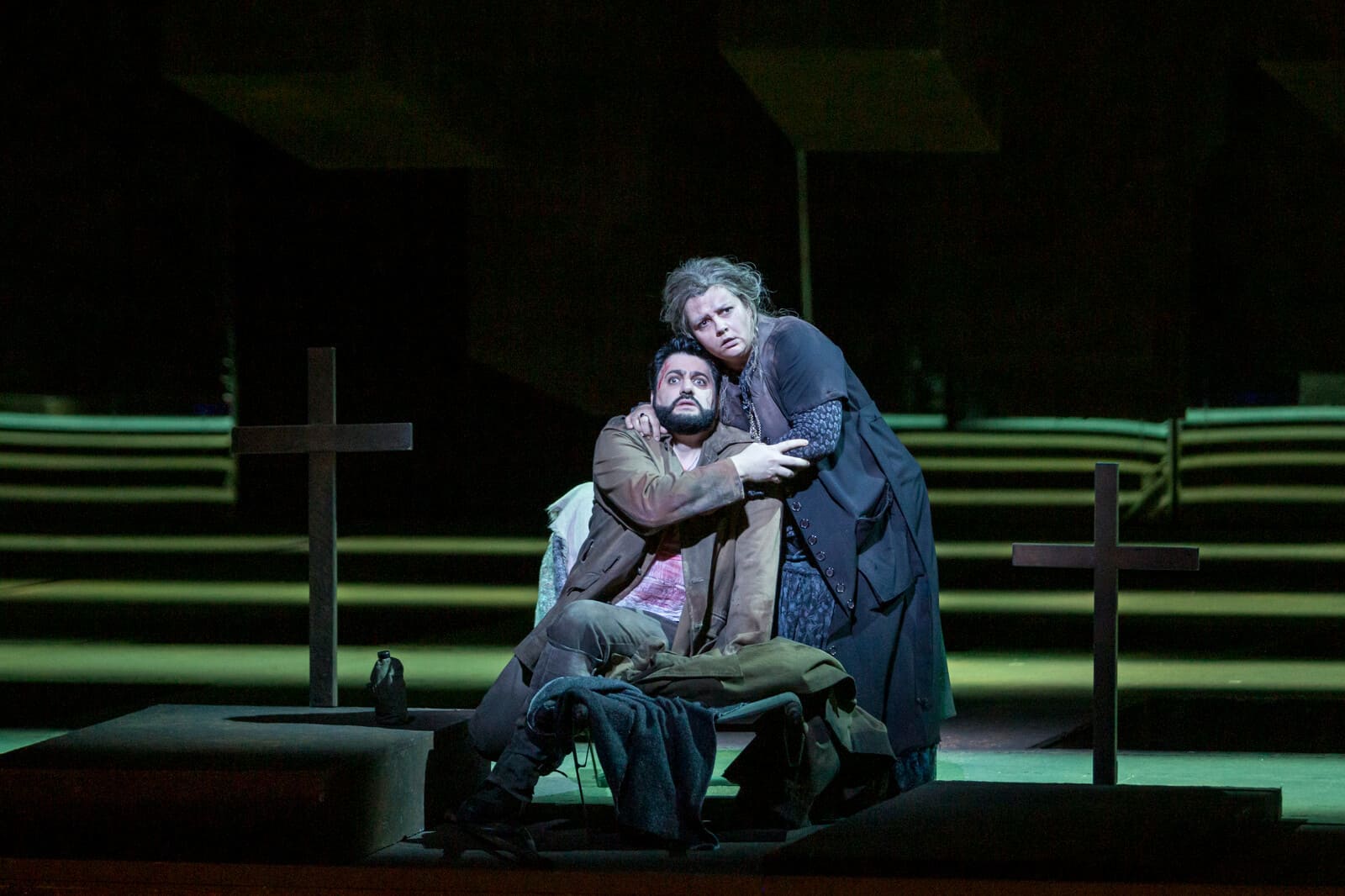
In their camp, the gypsies prepare for their day. The sight of the flames reminds Azucena of her mother burning at the stake. Even though Manrico emerged victorious from the duel with the Count di Luna, he left the latter alive in order to confront him in armed combat later. Left for dead on the battlefield, he was nursed back to health by his mother Azucena. The gypsy recounts how her mother was consumed by the flames and how, out of vengeance, and in a moment of mental confusion, she threw her own son into the flames and not the Count’s child. Manrico asks her: if he is not her son, then who is he in reality?
Azucena composes herself and manages to reassure him. A messenger arrives with news that Leonora, believing Manrico to be dead, is about to enter a convent. Manrico races to her side to prevent her from doing so. The Count di Luna, who has also learned of Leonora’s intentions, decides to abduct her but Manrico gets there first and the two lovers escape together.
Second part
Act 3 - The gypsy woman's son
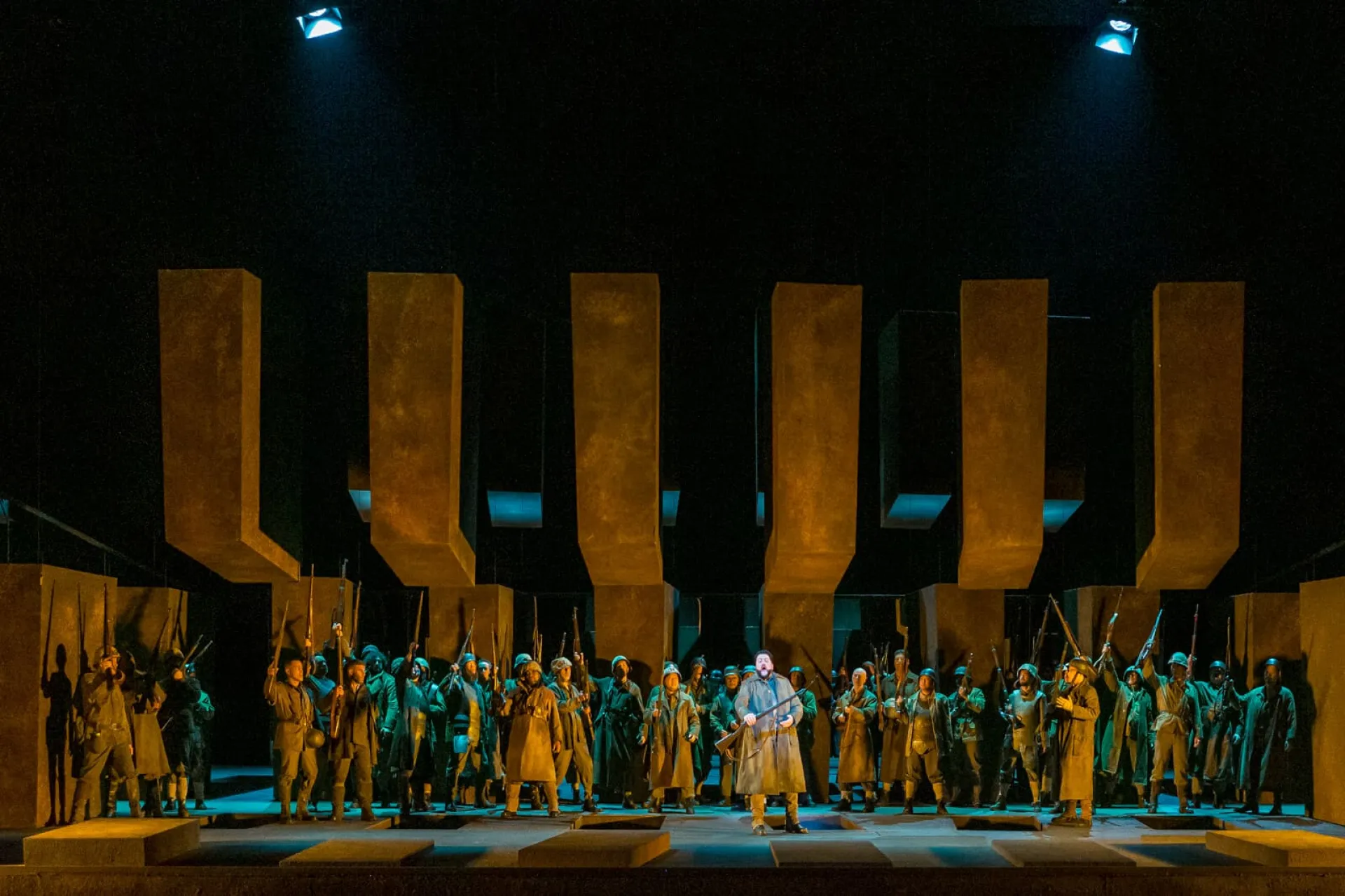
The Count di Luna’s soldiers prepare to attack Manrico and Leonora’s hiding place. The Count fears that he has lost Leonora to his rival forever. Azucena, who has come in search of Manrico, is arrested near the lovers’ refuge and is accused of spying.
Ferrando recognises her as the woman who abducted the brother of the young Count several years earlier. When she calls on Manrico, her presumed son, for help, Luna also realises that she is the mother of his enemy and he sentences her to death. Manrico and Leonora prepare to marry in secret. Ruiz, Manrico’s friend, arrives and informs them that Azucena has been imprisoned. Manrico calls on his friends to help him free the gypsy woman whom he believes to be his mother.
Act 4 - The punishment
Manrico’s attempts to free his mother have failed. He and Azucena are now imprisoned at the mercy of the Count di Luna and are to be executed at dawn. Leonora, who nevertheless managed to escape, persuades Ruiz to take her to the prison where Manrico and his mother are to be executed the following morning at dawn. She begs the Count di Luna to spare Manrico and is even ready to give herself to him in exchange. The Count accepts the offer.
However, in order to avoid keeping her promise, she secretly swallowsa poison. Leonora reaches the prison. She tries to convince Manrico to flee without her. Believing he has been betrayed, Manrico curses his beloved. However, when the poison starts to take effect, he realises that she has sacrificed herself out of love for him. The Count di Luna, who has been listening to everything, realises that Leonora has deceived him. He orders the immediate execution of Manrico and forces Azucena to witness the death of her presumed son, after which the gypsy reveals the terrible truth to the Count: Manrico was his brother.
CHARACTERS
Ferrando: Captain of the Count di Luna’s guard
Leonora: Lady-in-waiting to the Princess of Aragon
Ines: Leonora’s confidante
The Count di Luna: A young nobleman of Aragon
Manrico: A troubadour, he is Count di Luna’s political rival and rival in love
Azucena: A gypsy, believed to be Manrico’s mother
Ruiz: A partisan of Manrico
Cast
Opera in four parts (1853)
After Antonio García Gutiérrez
Language : Italian
Surtitle : French / English
Duration : 2h50 with 1 interval
First part: 70 min
Intermission: 30 min
Second part: 70 min
Creative team
Giuseppe Verdi: Music(1813 - 1901)
Salvatore Cammarano: Libretto
Timur Zangiev: Conductor
Ching-Lien WuChorus master
Alex Ollé: Director
Valentina Carrasco: Artistic collaboration
Alfons Flores: Set design
Lluc Castells: Costume design
Urs Schönebaum: Lighting design
Cast
Yusif Eyvazov: Manrico(16 Jan. > 15 Feb.)
Gwyn Hughes Jones: Manrico(18 > 27 Feb.)
Tamara Wilson: Leonora(16 Jan. > 15 Feb.)
Saioa Hernández: Leonora(18 > 27 Feb.)
Quinn Kelsey: Il Conte di Luna(16 Jan. > 15 Feb.)
Artur Ruciński: Il Conte di Luna(18 > 27 Feb.)
Yulia Matochkina: Azucena
Le Bu: Ferrando(16 Jan. > 15 Feb.)
Morgan-Andrew King: Ferrando(18 > 27 Feb.)
Margarita Polonskaya: Ines
Bergsvein Toverud: Ruiz
Fabio Bellenghi: Un vecchio Zingaro
Ook Chung: Un messo
The Paris Opera Orchestra and Chorus
A coproduction with the Nederlandse Opera, Amsterdam and the Teatro dell’Opera, Roma
Media
Venue
Paris Opera Bastille
RM Europa Ticket GmbH is an officially accredited ticket reseller of/by Opera National de Paris.
Agency number: 4848428
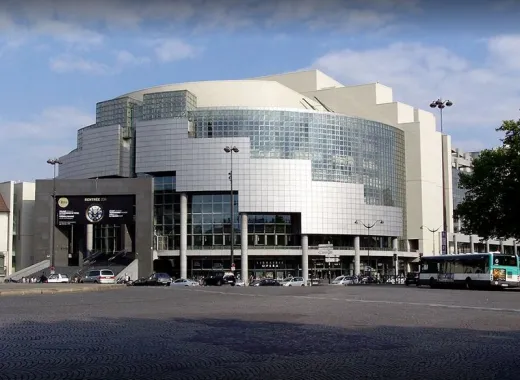
Opéra Bastille
A great modern theatre
The Opéra Bastille is the work of the Canadian-Uruguayan architect Carlos Ott, who was chosen in November 1983 after an international competition that attracted entries from some 1,700 architects. The theatre was inaugurated on July 13th 1989.
Its architecture is marked by transparent façades and by the use of identical materials for both the interiors and the exteriors.
With its 2,700 acoustically consistent seats, its unique stage facilities, its integrated scenery, costume and accessory workshops, as well as its numerous work areas and rehearsal rooms, the Opera Bastille is a great modern theatre.
Stage facilities
Orchestra pit, mobile and adjustable, can be covered; at its largest it can house 130 musicians
Main stage, 45 m high, 30 m wide, 25 m deep, made up of 9 elevators allowing several levels to be created and supported by three main elevators, which bring scenery up from below stage
Clearing zones, 4 storage areas with the same dimensions as the stage
Backstage area, with its scenery turntable
Circulation area, scenery temporarily stored between the stage, workshops and rehearsal stage
Rehearsal stage, the Salle Gounod, with its orchestra pit and dimensions identical to those of the main stage
The building
Area at ground level: 22,000 m²
Floor area: 160,000 m²
Total height: 80 m (including 30 m below street level)
The auditoriums
The main auditorium
Area: 1,200 m², 5% of the total for the building
Dimensions: 20 m high, 32 m deep, 40 m wide
Number of seats: 2,703
Materials: blue granite from Lannelin in Brittany, pearwood from China, glass ceiling
The amphitheatre
Area: 700 m²
Depth : 21.4 m
Number of seats : 450
Materials: white breccia marble from Verona, staff ceiling
The Studio
Area: 280 m²
Depth: 19,5 m
Number of seats: 237
Materials: white breccia marble from Verona and pearwood
Gift someone an unforgettable night at the opera. Choose a gift coupon and let them pick the performance they love—music, drama, and world-class artistry, all in one elegant experience.
 en
en 
 de
de it
it fr
fr es
es ru
ru jp
jp ro
ro







 Paris Opera Bastille
 Sat 16 Jan 2027 - Sat 27 Feb 2027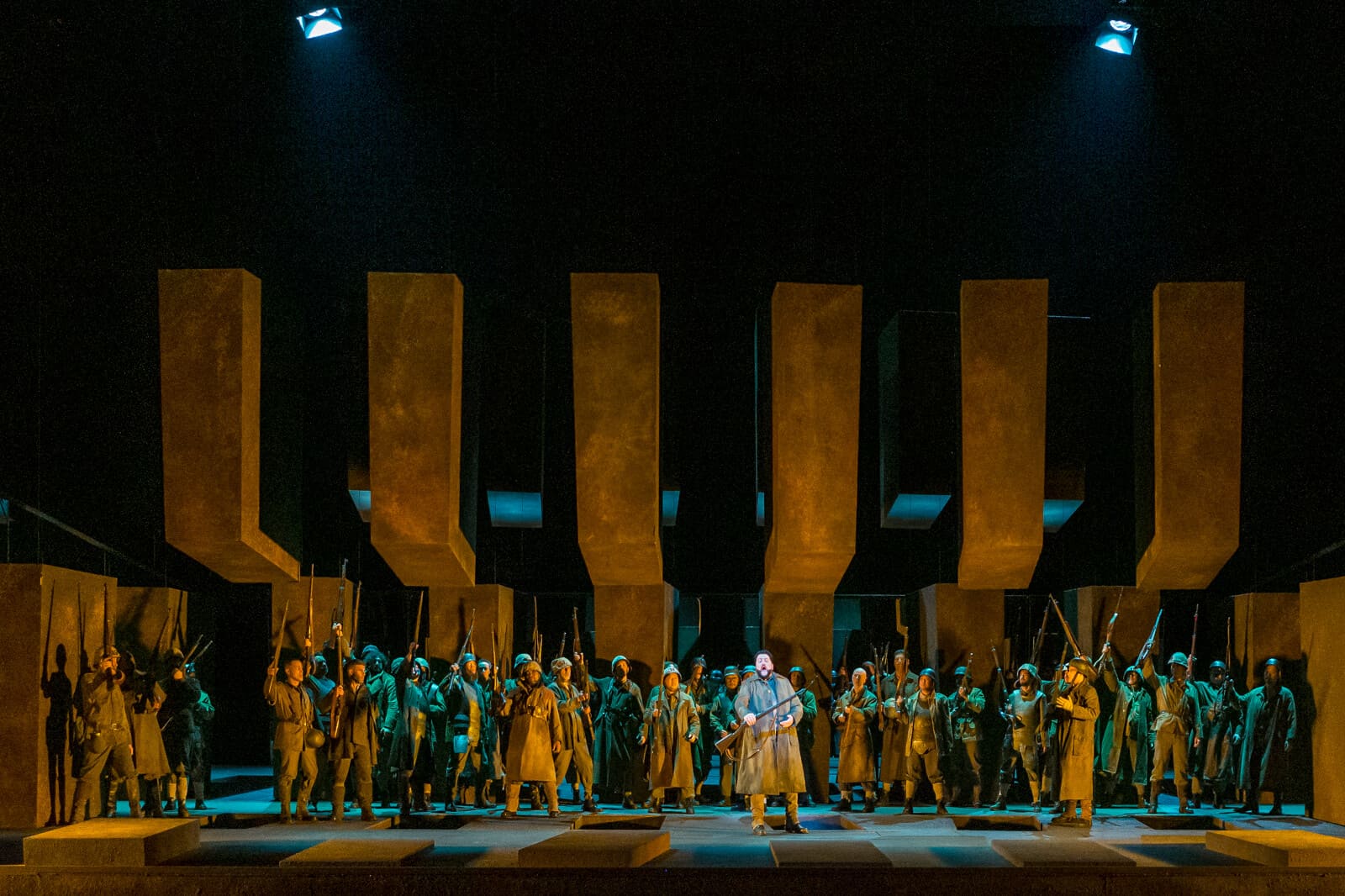



 RM EUROPA TICKET GmbH
 Call now
 Book now