
 EN
EN DE
DE IT
IT FR
FR ES
ES RU
RU JP
JP RO
RO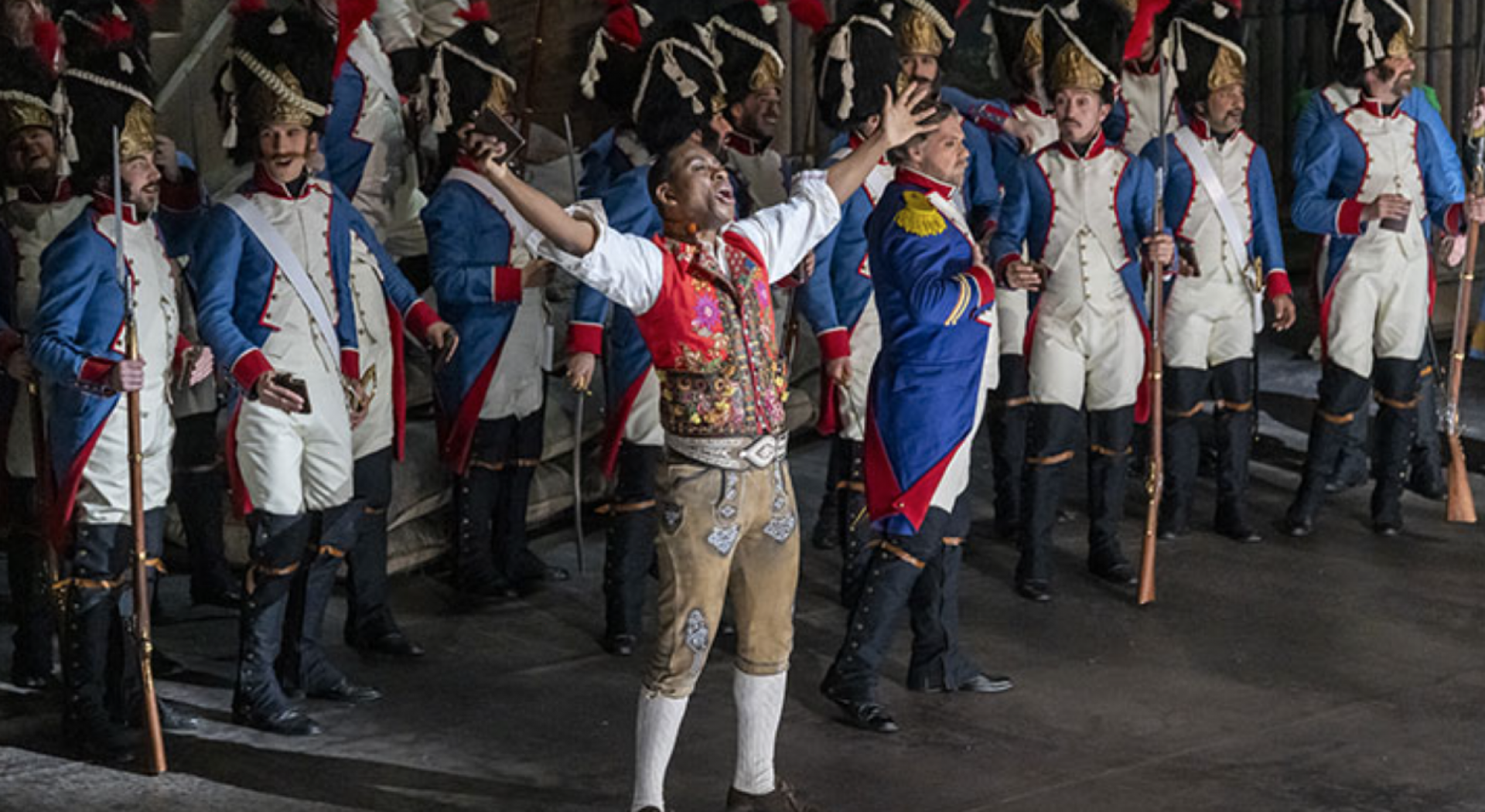
© Franck Putigny
Donizetti, La Fille du régiment
Order tickets
December 2026  | ||||||
|---|---|---|---|---|---|---|
Mo | Tu | We | Th | Fr | Sa | Su |
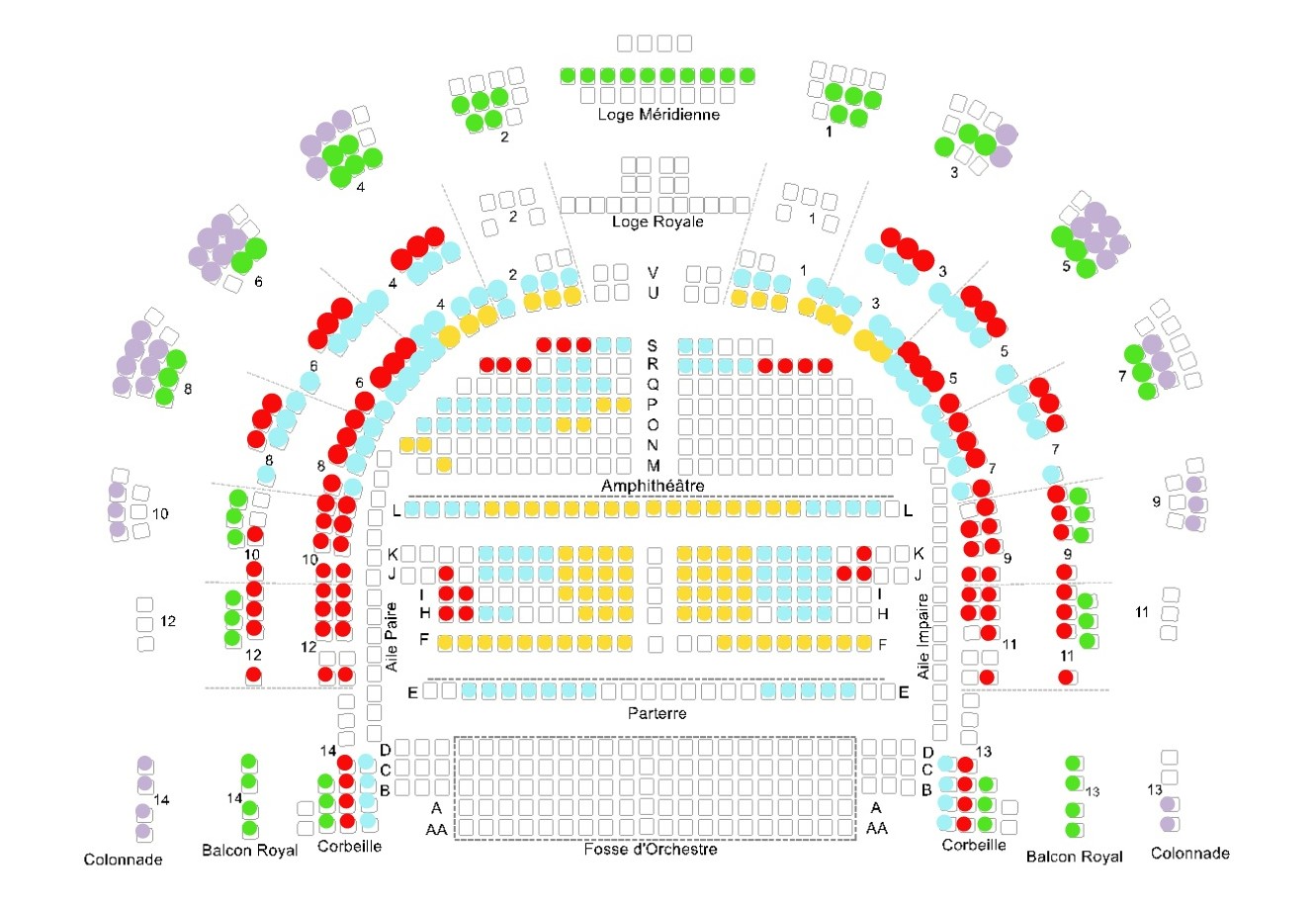
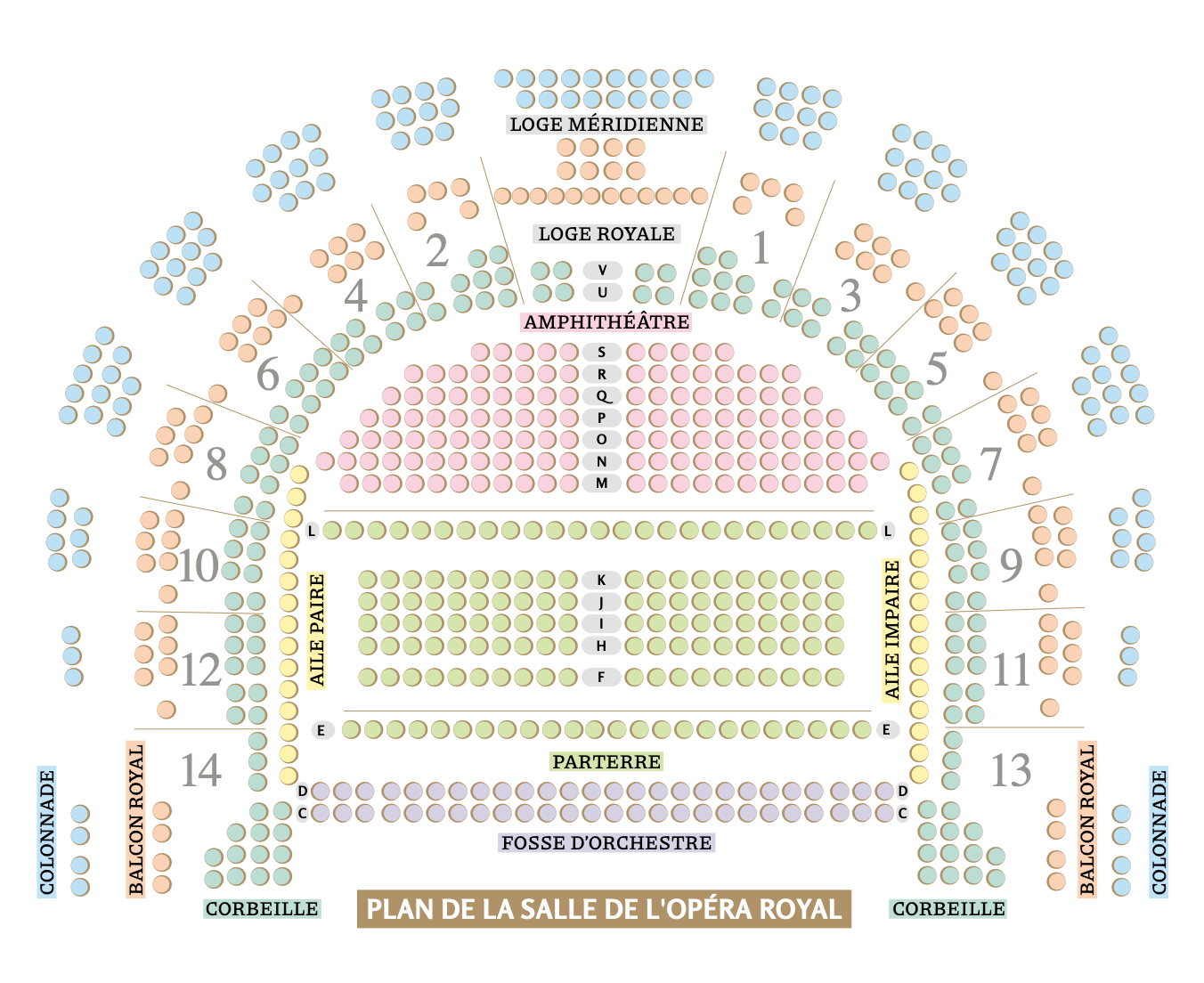
DOGE CATEGORY: The best seats in the hall, the program offered, an invitation to the cocktail dinner and unlimited champagne offered (opens 45 minutes before the show and at intermission if applicable).
PRESTIGE VIP CATEGORY: The best seats in the hall, the program will be offered as well as a glass of champagne.
PRESTIGE CATEGORY: Excellent seats, program and a glass of champagne will be provided.
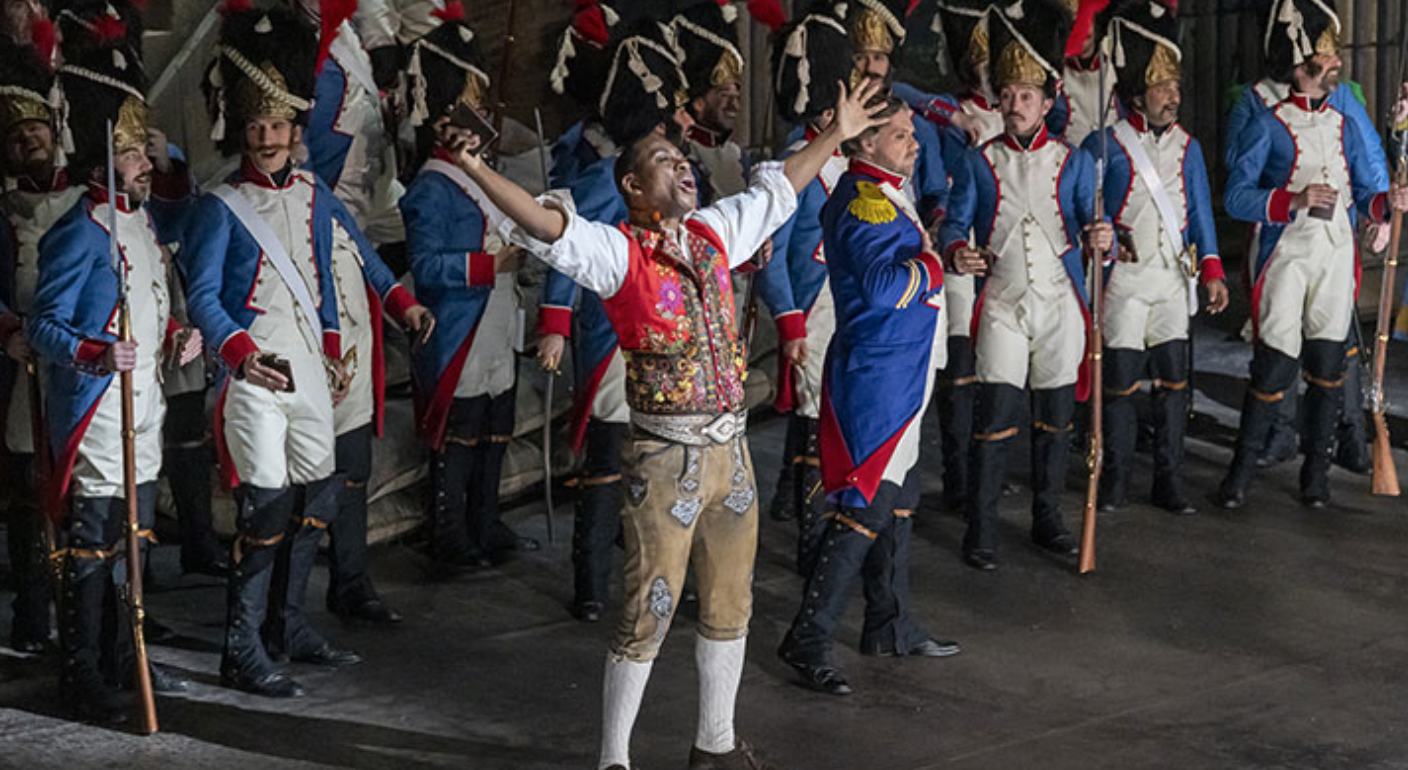
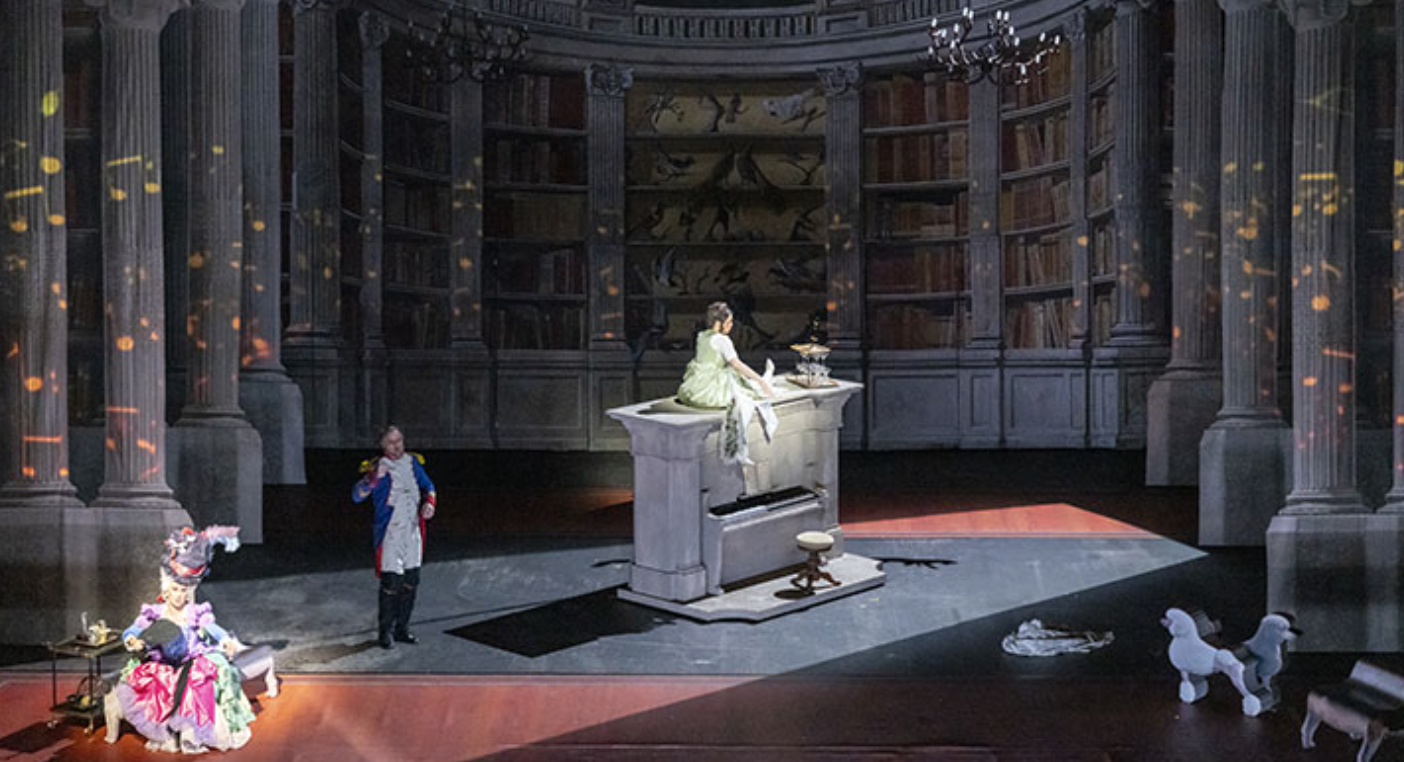
Flush with exceptional success, Donizetti presented his first opera in French in Paris in 1840 : La Fille du régiment (The Daughter of the Regiment). King Louis-Philippe had just reopened the gates of Versailles, deciding to create a museum there dedicated "to all the glories of France." Napoleon was honored there more than Louis XIV, and France was preparing to fervently welcome the return of the Emperor's ashes. In short, patriotism was running high, and La Fille du régiment perfectly captured the mood. To sing of this unlikely love between the vivandière Marie, who becomes the regiment's adopted daughter, and the brave Tonio, who rescued the young woman and joined Napoleon's army, Donizetti indulged himself wholeheartedly: patriotic arias and choruses, a display of bel canto , and Tonio's famous aria, "the Everest of Lyric Art," with its nine high Cs!
The thousandth performance was reached in 1914 in Paris. During the December 1940 performances at the Metropolitan Opera in New York, Lily Pons, after a stunning "Salut à la France," sang La Marseillaise , which became a symbol of freedom in the midst of war. The virtuoso soloists Catherine Trottmann and Patrick Kabongo, accompanied by the French Army Choir, will transport the audience of the Royal Opera to the beating heart of the nation!
Program and cast
Comic opera in two acts with a libretto by Jules-Henri Vernoy de Saint-Georges and Jean-François Bayard, created in Paris in 1840.
Sung in French.
Show in French with French and English surtitles.
December 31st session : the transition to the new year will be celebrated with an exceptional fireworks display launched from the Hall of Mirrors , for an end to the evening that is as spectacular as it is unforgettable (subject to weather conditions on the day).
Part One: 1 hour 15 minutes
Intermission
Part Two: 50 minutes
Cast
Catherine Trottmann: Marie
Patrick Kabongo: Tonio
Marc Scoffoni: Sulpice
Héloïse Mas, The Marquise of Berkenfield
Jean-Gabriel Saint-Martin: Hortensius
Emmanuelle Jakubek: The Duchess of Crakentorp
Baptiste Bonfante*: A peasant, A notary
Jérémie Delvert**: A corporal
* Members of the Royal Opera Academy – class 2025/2027
** Member of the French Army Choir
French Army Choir
Chorus of the Royal Opera
Orchestra of the Royal Opera
Gaétan Jarry: Direction
Jean-Romain Vesperini, assisted by Claire Manjarrès, Directed by
Christian Lacroix, assisted by Jean-Philippe Pons, Costumes
Roland Fontaine: Set Design
Étienne Guiol: Video
Christophe Chaupin: Lights
Laurence Couture: Makeup and Hairstyling
Maurine Baldassari and Cécile Larue: Wigs
Julie Berce: Accessories
Photo gallery
© Franck Putigny
© Franck Putigny
© Franck Putigny
Palace of Versailles Opera Theater
Royal Opera
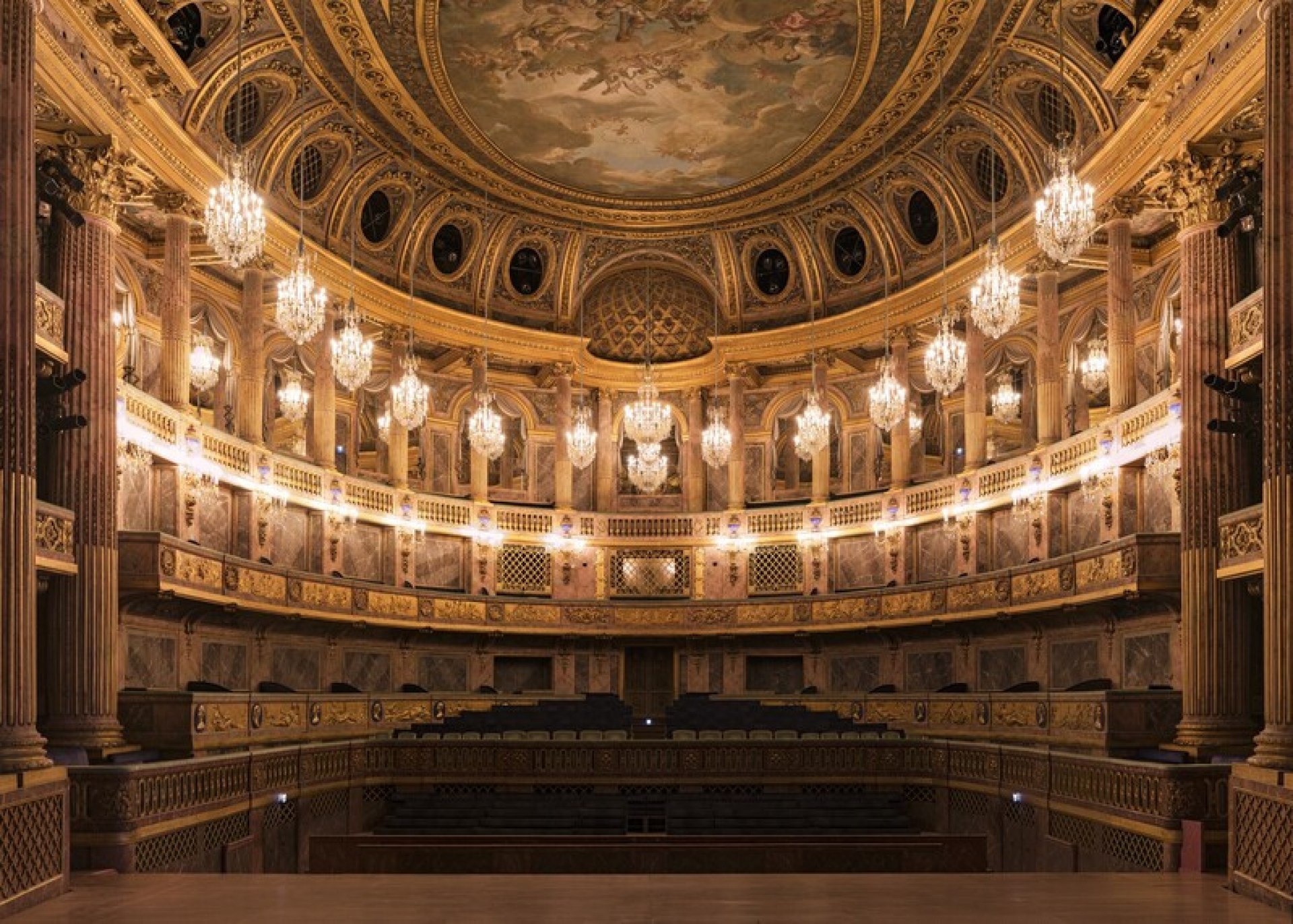
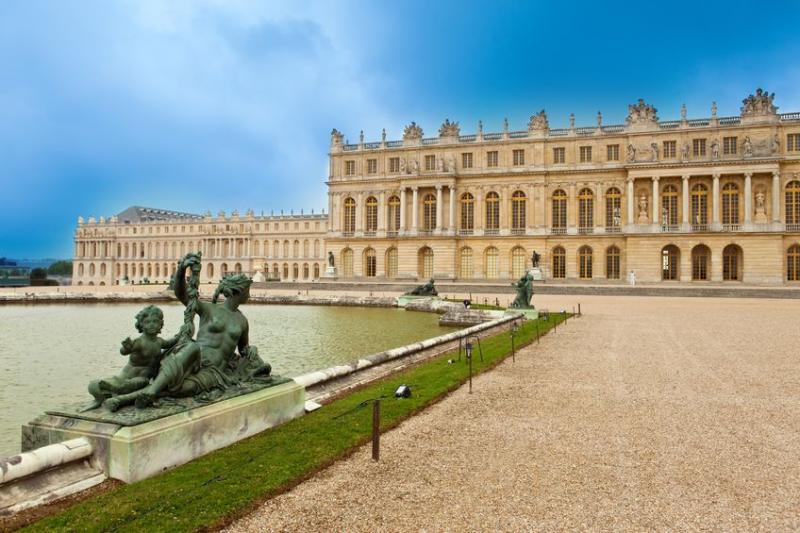
The Royal Opera of Versailles, located in the grounds of the Castle, one of the major opera houses.
The opening of the opera house at Versailles brought to a close a process of planning, projects and designs that had lasted for nearly a century. While the Royal Opera was finally built towards the end of the reign of Louis XV, it had been envisaged since as early as 1682, the year when his predecessor Louis XIV took up residence at Versailles. The King had commissioned Jules Hardouin-Mansart and Vigarani to draw up plans for a ballet theatre. Mansart shrewdly decided on a position at the far end of the new wing that was to be built over the coming years: the nearby reservoirs for the gardens’ fountains could be used to fight any fire that might break out, while the sloping ground on that part of the site would allow provision of the necessary technical spaces below the stage without major excavation work. So cleverly-chosen, indeed, was the planned location that none of Mansart’s successors ever questioned it.
Major building work was already under way in 1685, but was soon interrupted because of the wars and financial difficulties which beset the later part of the king’s reign. Louis XV in his turn was long put off by the huge expense involved in the project. As a result, for almost a century the French court was forced to put up with a makeshift theatre installed below the Passage des Princes. When a grand opera was required, with a large cast and complicated stage machinery, a temporary theatre would be built in the stables of the Grande Ecurie, with the entire structure being demolished once the performances were over. This temporary solution was adopted, for instance, during the celebrations of the Dauphin’s wedding in February 1745, but its inconvenience was so starkly obvious that Louis XV finally resolved to build a permanent theatre, entrusting its design to his first architect, AngeJacques Gabriel.
The process of actually building the new theatre, however, was to take over twenty years. During this lengthy period of construction Gabriel, who had studied the leading theatres of Italy, in particular Vicenza, Bologna, Parma, Modena and Turin, presented a series of different designs to his royal patron, none of which was accepted. Only in 1768, faced with the forthcoming successive marriages of his grandchildren, did the king finally give the order for work to commence. Building progressed steadily and the new opera house was completed in twenty-three months, ready for its inauguration on the 16th of May 1770, the day of the Dauphin’s marriage to the Archduchess Marie-Antoinette, with a performance of Persée by Quinault and Lully.
Royal Chapel
This extraordinary two-level palatine chapel was built by Jules Hardouin Mansart between 1699 and 1708 and completed by Robert de Cotte in 1710.
The paintings on the vaulted ceiling by Antoine Coypel, Charles de la Fosse and Jean Jouvenet, as well as the lavish decoration fashioned by a team of sculptors working for Louis XIV, depict a number of Old and New Testament scenes. Facing the royal gallery is the remarkable organ, created by Robert Clicquot, the King's organ builder, which was first played on Easter Sunday 1711 by François Couperin.
Even though Hardouin-Mansart did not witness the completion of the chapel, he was the one who had dictated the major aspects of the architecture and decor: a ground floor with a nave, aisles and ambulatory, and an upper floor with galleries, a harmonious combination of white and gold contrasting with the polychromatic marble floor and paintings on the vaulted ceiling, all combining to create an original space with references to both gothic architecture and baroque aesthetics.
Every day, generally at 10 a.m., the court would attend the King's mass. The King would sit in the royal gallery, surrounded by his family, while the ladies of the court would occupy the side galleries. The "officers" and the public would sit in the nave. The King would only descend to the ground floor for important religious festivals when he would take communion, for Order of the Holy Spirit ceremonies and for the baptisms and weddings of the Children of France, which were celebrated there between 1710 and 1789. Above the altar, around the Cliquot organ played by the greatest virtuosos of their age, including François Couperin, the Chapel Choir, renowned throughout Europe, would sing motets throughout the entire service, every day.
The Orangerie gardens
From May to October, orange trees and other shrubs are taken out of the Parterre Bas of the Orangerie gardens. At the center of this parterre, there is a large circular pool surrounded by six sections of lawn.
Orangerie
A great stone cathedral within a formal garden, The Orangerie is both a royal and magical place.
Built between 1684 and 1686 by Jules Hardouin-Mansart to house and protect precious trees and shrubs during the Winter, this extraordinarily large building is located beneath the parterre du Midi (South flowerbed), for which it acts as a support. Two monumental staircases, known as "les Cent Marches" (the hundred steps), frame the Orangerie's three galleries, which overlook the parterre where, during the Summer, more than 1,200 exotic trees are arranged.
Related events